Hours
Monday to Friday: 9AM - 5PM


In the world of independent specialty retail, email marketing often gets a bad reputation. Many shop owners equate “email” with “spam”—the loud, flashy, discount-heavy blasts that clog our inboxes from big-box retailers. Because independent shops value their community and their reputation, they often hesitate to send anything at all, fearing they will “annoy” their customers.
But this hesitation is a missed opportunity. For an independent shop, the most effective email strategy isn’t the “Big Swing”—it’s the steady, quiet support. It’s about being the expert in the room when the customer has a question, rather than the salesperson shouting about a 10% discount.
The Operational Mindset vs. The Marketing Mindset
Most e-commerce advice tells you to focus on “growth hacks” and “sales funnels.” For a bike, snow, or outdoor shop, that’s the wrong lens. Instead, think of email as an extension of your service counter.
If a regular customer walks into your shop, you don’t immediately shout “Everything is 20% off!” You ask them how their last ride went, or you tell them about the new shipment of tires that just arrived. Your email strategy should follow the same logic.
Klaviyo’s benchmarks for the sports and fitness industry show that personalized, behavior-based emails (like post-purchase follow-ups) have significantly higher open and click-through rates than generic newsletters. This is because they feel like a conversation, not a broadcast.
The Abandoned Cart Myth
We need to talk about the “Abandoned Cart” email. Most generic e-commerce advice says you should send an automated reminder thirty minutes after a customer leaves your site. In specialty retail, a customer putting a $5,000 mountain bike or a complete backcountry ski setup in their cart and leaving doesn’t usually mean they forgot they were shopping.
It means they have questions. They are wondering if the geometry is right for their local trails, or if you can swap the stem before they pick it up.
The Peer-to-Peer Fix: A generic, automated “You left something behind!” email feels corporate and cold. A personal-feeling note is far more effective.
- The Script: “Hey, saw you were looking at the Stumpy—we actually have a medium on the floor if you want to come throw a leg over it and talk about the build. Just hit reply if you have questions.” This doesn’t feel like a “hack.” It feels like a shop owner being a shop owner.
The Three Essential “Quiet” Flows
If you want to move from “having an email list” to “running an email strategy,” you need to automate the basics so you can focus on the floor.
1. The Post-Purchase “Expert Guide”
The relationship shouldn’t end when the credit card is swiped. If someone buys a new bike or a pair of boots, send a series of two or three emails over the next month.
- Email 1 (Day 2): “How to care for your new gear” (Simple cleaning tips).
- Email 2 (Day 14): “The break-in period” (What to expect from cable stretch or boot packing).
- Email 3 (Day 30): “It’s time for your first check-in” (Promoting the service department).
2. The Service Reminder
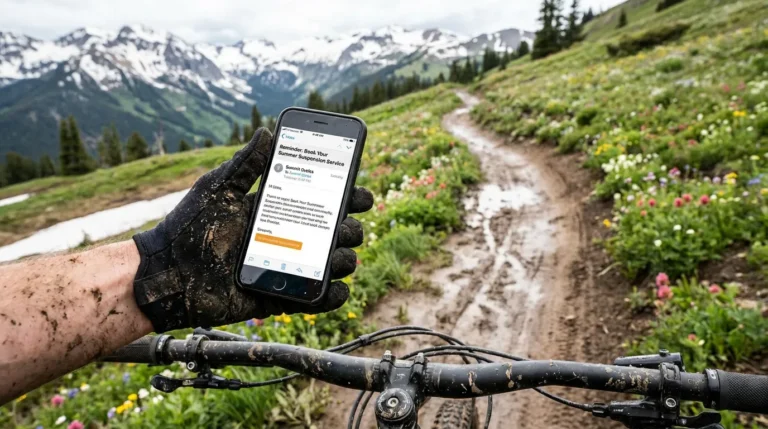
If your POS system knows a customer hasn’t been in for a tune-up in six months, your email system should know too. This is the highest-margin email you can send. It supports the shop floor and keeps your mechanics busy during the shoulder seasons.
3. The New Arrival “Quick Hit”
Instead of a massive monthly newsletter, send “Quick Hits.” Three sentences and one photo of a new product that just hit the shelves. It keeps your shop top-of-mind without demanding twenty minutes of the reader’s time.
Deliverability and the “Clean” List
If you are going to send emails, you need to make sure they actually land in the inbox. This is the technical side of e-commerce operations that many shops ignore.
- The CAN-SPAM Act: Ensure you are compliant with FTC guidelines regarding commercial emails. This includes having a clear “Unsubscribe” link and a physical address in the footer.
- List Hygiene: Sending emails to people who haven’t opened one in two years actually hurts your “Sender Reputation.” This means Gmail and Outlook are more likely to send your emails to the spam folder for everyone else. According to Mailchimp’s guide on list maintenance, regularly “pruning” your list leads to better engagement and higher ROI.
The Operational Reality: Who Writes the Emails?
The reason most shops don’t send regular emails isn’t a lack of ideas; it’s a lack of time. The shop owner intends to send a “Spring Prep” email in March, but then the weather breaks, the shop gets slammed, and suddenly it’s June.
“Running” an email strategy means planning these touchpoints during the quiet months.
- Batching Content: Write your seasonal “operational” emails in January when the shop is quiet.
- Automation: Set up your “Welcome” and “Post-Purchase” flows once, so they work for you while you’re on the floor.
Consistency Beats Intensity
You don’t need a graphic designer to have a successful email strategy. In fact, for an independent shop, high-production, heavily designed emails can actually backfire—they look like they came from a corporate marketing department.
Plain-text emails, or emails with one clear, high-quality photo, often perform better. They look like they were written by a person, not a committee. As Nielsen Norman Group’s research on email newsletters suggests, users value “useful, informative content” over visual flair.
The Bottom Line
Your email list is one of the only assets you truly own. Unlike social media, where an algorithm change can hide your posts from your own followers, an email list is a direct line to your most loyal customers.
Running a shop is a long game built on trust and expertise. Your digital communication should reflect that. Stop trying to “disrupt” their inbox and start trying to be helpful. When you shift your focus from “selling” to “supporting,” you’ll find that the revenue follows naturally.
This is the kind of work Upline helps shops stay on top of. We don’t just “send blasts”; we help you build a consistent, professional, and quiet presence in your customers’ inboxes that keeps them coming back to the shop floor.