Hours
Monday to Friday: 9AM - 5PM


Bike season doesn’t ramp up slowly. It hits. Service fills up. Inventory moves. Customers flood in. And once the shop is busy, e-commerce becomes reactive instead of intentional. That’s why the best time to prepare your online systems isn’t mid-season, it’s right before it starts. Well-built automations don’t replace human work. They protect it. They keep communication running even when the shop is at capacity. Here are five automations every independent bike shop should have in place before the season kicks off.
1. Welcome Email Flow
Most bike shops collect emails. Few use the first email well.
A welcome flow is your digital handshake. It sets expectations and establishes trust immediately.
A good bike shop welcome sequence should:
- Introduce your shop’s personality
- Highlight service capabilities
- Point customers toward key categories
- Explain what kind of emails they’ll receive
This isn’t about discounts. It’s about orientation.
Customers who understand your shop buy more confidently.
2. Abandoned Cart Recovery
Bike purchases are considered purchases. So are helmets, accessories, and service bookings.
People leave carts for reasons that have nothing to do with rejection:
- Distraction
- Timing
- Comparison
- Budget planning
A calm, well-written abandoned cart email brings customers back without pressure.
Key principles:
- Reminder, not guilt
- Simple subject line
- Clear path back to checkout
- Mobile-friendly design
Even a modest recovery rate adds up quickly during peak season.
3. Post-Purchase Follow-Up
Most bike shops stop talking after the sale.
That’s a missed opportunity.
Post-purchase automation should:
- Reinforce trust
- Provide setup or care tips
- Encourage service scheduling
- Suggest relevant accessories
This isn’t upselling. It’s customer support at scale.
Customers who feel supported return for service and upgrades.
PeopleForBikes regularly emphasizes customer retention as a core industry strength — and post-purchase communication is part of that ecosystem.
4. Service Reminder Automation
Your service department is recurring revenue.
Automations can support it quietly.
Examples:
- 60-day tune-up reminders
- seasonal check-in emails
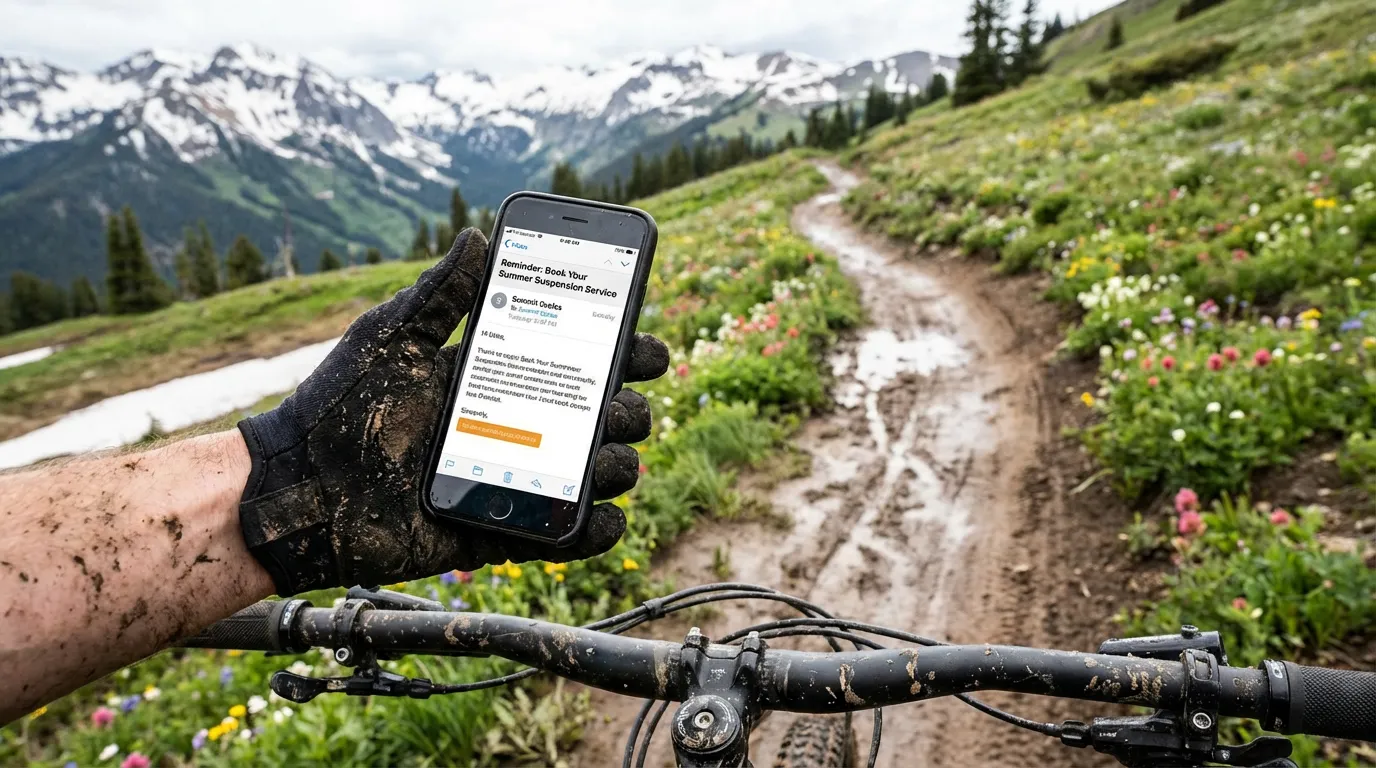
- suspension service intervals
- commuter maintenance reminders
These emails don’t feel like marketing. They feel like care.
They also keep service calendars healthier.
5. Seasonal Campaign Automation
Seasonal messaging shouldn’t rely on memory.
Automations can prepare:
- Spring kickoff
- Back-to-school commuting
- Holiday service rush
- Winter storage and maintenance
When these campaigns are templated and scheduled early, the shop avoids last-minute scrambling.
Consistency beats urgency.
Why Automations Matter for Independent Shops
Automations don’t replace the shop floor.
They protect it.
They ensure that:
- Customers are acknowledged
- service is supported
- opportunities aren’t missed
- communication continues during busy weeks
Most shops don’t lack ideas. They lack bandwidth.
Automations turn intention into execution.
A Final Thought
Bike season moves fast. Shops that rely entirely on manual communication fall behind without realizing it.
Automations aren’t about sophistication. They’re about stability.
When they’re built correctly, customers feel taken care of — even when the shop is slammed.
And that’s the real goal.
This kind of steady, behind-the-scenes system building is exactly what Upline focuses on keeping e-commerce running so shops can focus on customers.