Hours
Monday to Friday: 9AM - 5PM

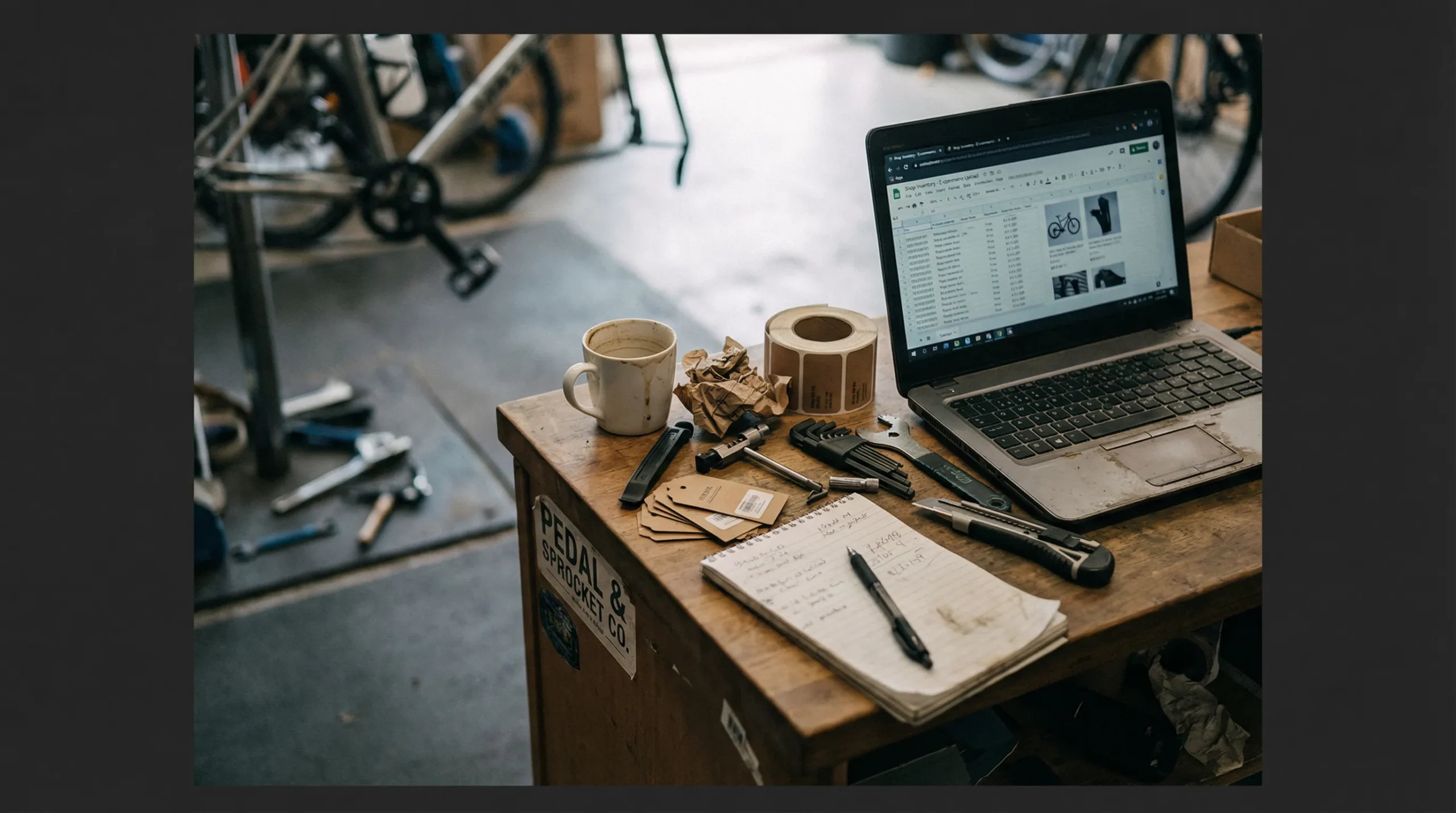

Running a bike shop has always required knowing a lot of things at once — product, fit, service, community, and the business itself. E-commerce added another layer, and for most independent shops, it landed without a manual. You got a website, a product feed, maybe a Shopify or Workstand setup, and the assumption that it would run itself. It doesn’t.
This guide covers everything an independent bike shop needs to know about running e-commerce properly in 2026 — not from a startup perspective, but from the reality of what it actually takes to make an online store work alongside a real shop floor.
What ‘Running E-Commerce’ Actually Means for a Bike Shop
There’s a difference between having e-commerce and running it. Having it means a website exists, a feed is connected, and products show up. Running it means someone is actively managing what customers see, making sure the seasonal content is current, keeping high-margin items visible, and turning site visitors into email subscribers and repeat buyers.
Most independent shops are in the first camp. The feed is live, the products are there, and the site mostly works. But nobody is driving. That’s where sales get lost — not to the big box stores on price, but to friction, stale content, and missed follow-up.
The Platform Landscape: What Bike Shops Are Actually Using
The platform question comes up early and often. Here’s a plain-language breakdown of where most independent shops land:
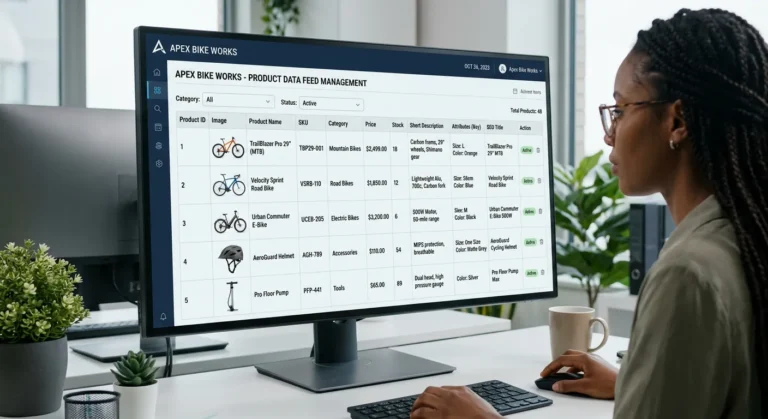
Workstand is the veteran of the bike shop e-commerce space — over two decades in the industry, the largest cycling product catalog, and deep supplier integrations with QBP, BTI, J&B, and others built right in. If you’re on Workstand, your catalog infrastructure is solid. The gap is almost always on the merchandising and marketing side: the feed is running, but nobody is actively curating what customers see or building email flows on top of it.
Masterlinq connects Shopify stores to major bike industry distributors, handling product data feeds, inventory sync, and dropship order routing. It’s a strong infrastructure play for shops that want to run Shopify without manually managing distributor catalogs. The same principle applies: Masterlinq handles the data layer, but the storefront still needs active management to convert.
Frengee is a newer Shopify-native option — fully embedded in the Shopify admin, no extra platforms or logins required. It handles real-time inventory and price syncing from supplier feeds automatically. For shops that want a clean Shopify setup with minimal manual data work, it’s a strong fit. Again, the automation covers the plumbing. The marketing layer is still a separate problem.
Some shops are running WooCommerce on WordPress, often because it gave them more control or their developer built it that way. WooCommerce is capable, but it requires more active maintenance than hosted platforms and the feed integration ecosystem is less mature for bike-specific distributors.
| The pattern across every platform: the technology handles the catalog. Nobody handles the store. That’s the gap Upline exists to close. |
The Five Pillars of Bike Shop E-Commerce That Actually Drive Sales
1. Merchandising — Making the Feed Work
A distributor feed pumps in thousands of products automatically. That’s the warehouse. Merchandising is what makes it a store. It means curating featured products, rotating seasonal highlights, putting high-margin items in front of customers, and making sure the homepage doesn’t look the same in March as it did in October.
2. Email — Your Most Valuable Channel
Email consistently outperforms every other marketing channel in specialty retail. For a bike shop, it’s where you announce service availability, run pre-season campaigns, recover abandoned carts, and stay in front of your customer base through the slow months. Most shops aren’t collecting emails at all, let alone running flows.
3. SEO — Getting Found Locally
When someone searches ‘bike shop near me’ or ‘Trek dealer Bakersfield,’ your site needs to show up. That means your Google Business Profile is current, your location and hours are consistent across the web, and your site has actual content for Google to index beyond product pages. Shops on Workstand have some SEO built in — but local SEO still requires active attention.
4. Content — Giving Google Something to Work With
Product feeds give Google products. Content gives Google context. A monthly blog post about local trails, a seasonal gear guide, or a service department explainer does real work over time — building the organic traffic that paid ads can’t sustain long-term.
5. Conversion — Turning Visitors Into Buyers
Getting people to the site is half the job. The other half is making sure the site converts. That means clear calls to action, trust signals like reviews and policies, mobile-friendly layouts, and checkout processes that don’t leak customers at the last step.
What the Bike Industry Climate Means for E-Commerce in 2026
The bike industry is working through a correction. Inventory normalization, margin pressure, and cautious consumer spending are real. That makes e-commerce more important, not less — because shops that have active online channels and email lists have direct access to their customers regardless of foot traffic. The shops that went quiet online during the slow period will feel it longest.
It also means that shops need to be smarter about what they’re spending. Managed e-commerce support — having someone who handles the day-to-day online operations — is often more cost-effective than the alternative of a patchwork of agencies, freelancers, and internal staff who all have other priorities.
The Honest Assessment: Where Most Independent Shops Are Right Now
If you’re reading this, your shop probably has a website. It probably has a product feed running. It might have a basic email setup. What it likely doesn’t have is anyone actively managing it with a plan — someone who updates the homepage seasonally, builds email automations, monitors what’s converting, and fixes what isn’t.
That’s not a criticism. It’s the nature of running a shop. The floor comes first. E-commerce gets what’s left over, which is usually nothing.
The shops that are winning online aren’t winning because they have better technology. They’re winning because someone is showing up for the online side of the business the way a good lead mechanic shows up for the service queue — consistently, with a plan, and with the right experience to make the right calls.
| Sound familiar? If your shop is running one of these platforms and the online side isn’t keeping up with the shop floor, that’s exactly what Upline works on. No pitch, no pressure — just a straight conversation about what’s going on and whether we can help. Contact Us |