Hours
Monday to Friday: 9AM - 5PM

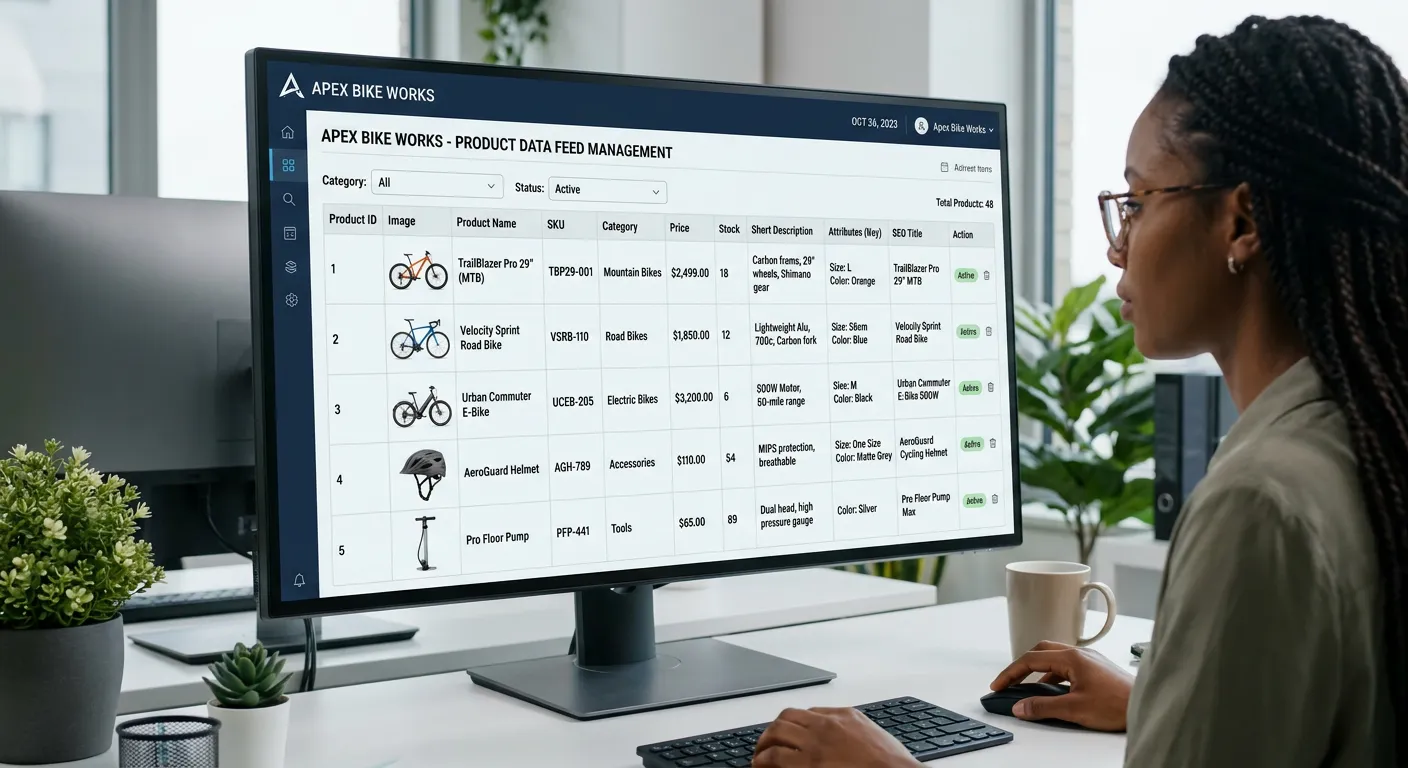

QBP, BTI, and J&B Importers are the three distributors that make up the backbone of most independent bike shop inventory. Between them, they represent the majority of the cycling product universe — brands, accessories, parts, apparel, and bikes across every price point. If you’re running an online store, you’re almost certainly pulling a feed from one or more of them.
The feed is a remarkable piece of infrastructure. And most shops are using about 20% of what it makes possible.
What the Three Major Feeds Cover
QBP (Quality Bicycle Products)
QBP is the largest cycling distributor in North America and their feed is the most comprehensive. It covers thousands of SKUs across virtually every product category, with strong representation in the enthusiast and specialty segments — Salsa, Surly, All-City, and dozens of other brands alongside the major players. Their data quality is generally strong — images, descriptions, and specs are reliable.
BTI (Bicycle Technologies International)
BTI specializes in European brands and higher-end components — Shimano, SRAM, Fox, RockShox, and a strong selection of performance-oriented brands. For shops with a more technical or performance-focused customer base, BTI’s feed is essential. Their inventory runs deep on parts and components.
J&B has the broadest reach into the value and mid-range segments, with strong representation in e-bikes, accessories, and lifestyle cycling products. For shops serving a more general consumer base — families, commuters, casual riders — J&B’s feed rounds out the catalog in important ways.
How the Feed Gets to Your Store
The feed itself is just a data file — the mechanism that gets it into your store depends on your platform:
- Workstand has all three distributor feeds built in and managed. You activate the brands and categories you carry and they appear in your catalog automatically.
- Masterlinq on Shopify connects to distributor feeds and handles the data translation, inventory sync, and dropship routing. It’s designed specifically to make QBP, BTI, and J&B work cleanly in a Shopify environment.
- Frengee on Shopify handles real-time syncing from distributor inventory — prices and stock levels update automatically, which is particularly valuable for high-velocity SKUs like tubes, tires, and accessories.
The Dropship Layer: What It Makes Possible
Beyond catalog population, the distributor feed relationship enables dropshipping — a customer buys something in your online store, and the distributor ships it directly to the customer from their warehouse. This means you can effectively sell a vastly larger catalog than what you have physically in stock.
The mechanics work well when managed properly. The risk is selling something that’s out of stock at the distributor level — which is why real-time inventory sync (what Frengee and Masterlinq both do well) matters. Nothing destroys customer trust faster than selling a product you can’t deliver.
The Merchandising Layer: Where Most Shops Are Missing the Opportunity
Here’s the honest assessment. Every shop running a QBP, BTI, or J&B feed through Workstand or Shopify has access to essentially the same catalog. The feed is table stakes. What differentiates a shop online is not the products available — it’s how they’re presented and who’s actively managing what customers see.
A shop that curates its feed, features the right products at the right time of year, builds editorial context around key categories, and runs active promotions and email campaigns on top of the feed data will dramatically outperform a shop that simply lets the feed run and calls it done.
The distributors have done the hard work of building the catalog infrastructure. The opportunity — and the gap for most shops — is in the store management layer that sits on top of it.
- Feature the right products for the current season, not just what the algorithm surfaces
- Build curated ‘staff pick’ or ‘our favorites’ collections that add a human editorial voice to the feed
- Set up clearance and outlet sections to move aged feed inventory intentionally rather than leaving it buried
- Use the feed’s breadth to support targeted email campaigns — ‘our top 10 trail accessories for fall’ built from BTI and QBP SKUs you actually carry
| The distributors built the warehouse. Your job is to run the store. That distinction — between having a catalog and actively merchandising it — is where independent shops either win or lose online. |
| Sound familiar? If your shop is running one of these platforms and the online side isn’t keeping up with the shop floor, that’s exactly what Upline works on. No pitch, no pressure — just a straight conversation about what’s going on and whether we can help. Contact Upline |