Hours
Monday to Friday: 9AM - 5PM

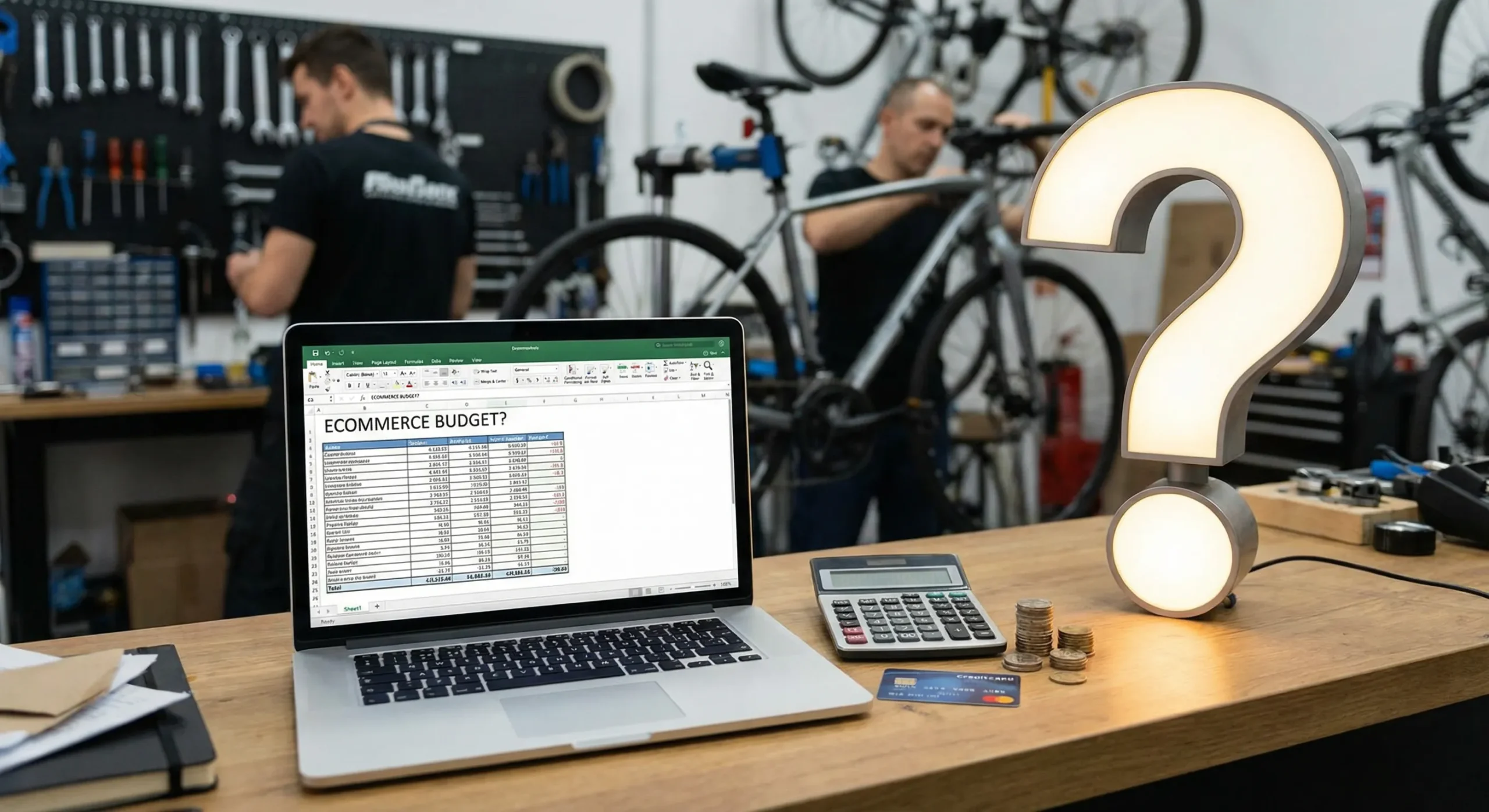

It’s one of the most common questions independent shop owners have and one of the least straightforwardly answered. The range in the market goes from ‘almost nothing’ to ‘more than your rent,’ and both ends exist for a reason.
Here’s a grounded breakdown of what bike shop e-commerce actually costs, what different levels of investment get you, and how to think about budget relative to what you’re trying to accomplish.
| Quick Answer A well-run independent bike shop should budget $300–$600/month for platform and tool costs alone (website platform, email tool, basic ads). Full managed e-commerce support — where someone is actively running the online side of your business — typically runs $2,000–$5,500/month depending on scope. The right number depends on how much of your revenue is online or online-influenced, and how much time the shop has to manage it internally. |
The Platform and Tools Layer: What You’re Already (or Should Be) Paying
Before any marketing spend, there are baseline costs for the infrastructure that keeps your store running:
- Workstand: plans start around $149–$299/month depending on features. Includes hosting, catalog, and supplier integrations.
- Shopify (with Masterlinq or Frengee): Shopify plans from $79–$299/month, plus Masterlinq or Frengee subscription fees on top. More flexible but more moving parts.
- Email platform: Klaviyo or Mailchimp from $0–$150/month depending on list size. Most shops under 2,000 contacts pay under $50/month.
- Google Ads: optional, but $300–$500/month is a reasonable starting budget for local campaigns. Below that it’s hard to get enough data to optimize.
Baseline total for a reasonably equipped shop: $300–$700/month before any paid support.
The Managed Support Layer: What It Costs to Have Someone Actually Running It
This is where most shops underinvest and then wonder why the site isn’t performing. The platform costs are table stakes. The support layer is where the difference gets made.
Managed e-commerce support for a bike shop generally breaks down into three levels:
Basic Maintenance ($1,500–$2,500/month)
Someone keeping the site current — seasonal homepage updates, featured product rotation, basic email campaigns, UX fixes. Enough to make sure the site isn’t stale and embarrassing. Not enough to grow aggressively.
Active Growth Support ($2,500–$4,000/month)
Full merchandising management, email automations built and running, content and SEO work, conversion optimization. The site is actively working to grow online revenue, not just maintain it.
Fully Managed E-Commerce ($4,000–$6,000+/month)
Everything above plus paid advertising management, comprehensive reporting, strategic planning, and consistent execution across all digital channels. Appropriate for shops where online revenue is a meaningful percentage of total sales.
How to Think About ROI
The right question isn’t ‘how much does it cost’ — it’s ‘what does my current online store cost me by underperforming?’ A bike shop with $500,000 in annual revenue where even 10% is influenced by the website is dealing with a $50,000 revenue line. If that line is being managed poorly, the cost of leaving it unmanaged is orders of magnitude higher than the cost of fixing it.
The shops that resist investing in e-commerce support are often the same shops whose sites are running stale content, missing email capture, and sending the same cookie-cutter newsletter as every other shop on the same platform.
What You Shouldn’t Cut
- Email platform — this is your highest-ROI channel and among your cheapest costs. Never cut it.
- Your website platform fees — the feed and catalog infrastructure has to stay current
- Seasonal content updates — a stale site costs you more in lost trust than it saves in management time
What’s Worth Investing In First
If you’re starting from a baseline of ‘site exists, nobody is managing it’ — the highest-return first investments are email capture and automation setup, homepage merchandising updates, and making sure your Google Business Profile is current and connected to the site. These moves have the best return relative to cost and don’t require a large ongoing commitment.
| Sound familiar? If your shop is running one of these platforms and the online side isn’t keeping up with the shop floor, that’s exactly what Upline works on. No pitch, no pressure — just a straight conversation about what’s going on and whether we can help. Contact the upline |