Hours
Monday to Friday: 9AM - 5PM

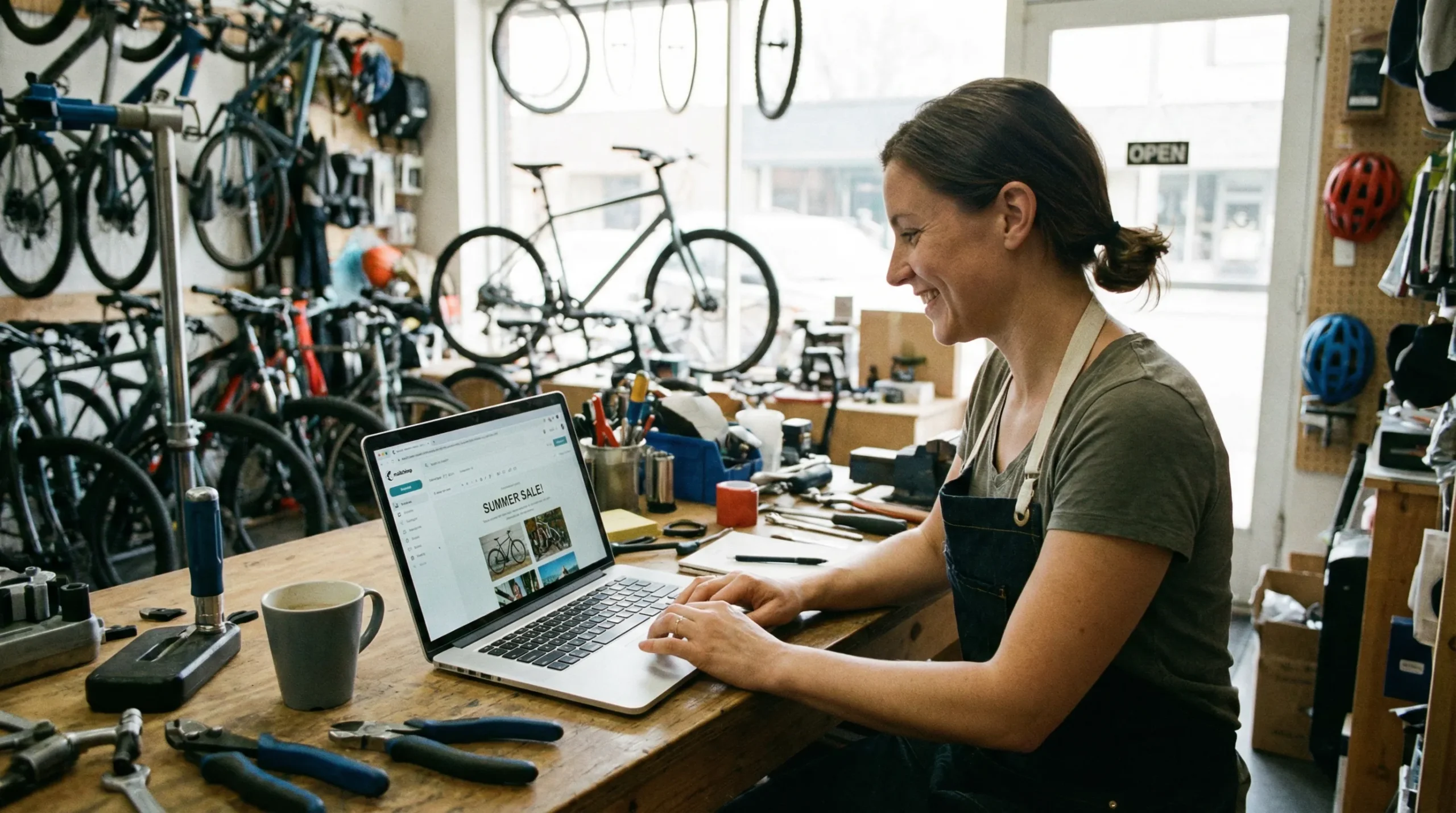

Email is the highest-ROI marketing channel in specialty retail. For a bike shop, it’s also the most underused. Most shops either have no email list at all, or they have a list they collected somewhere along the way and haven’t touched in two years. Neither of those is a foundation for anything.
This is a practical walkthrough — from choosing a platform to building your first automation — designed for shop owners who don’t have a marketing team and don’t want to spend three months setting this up.
Step 1: Choose an Email Platform
You don’t need anything complicated. For most independent bike shops, one of two platforms makes sense:
Klaviyo is the strongest option if you’re on Shopify (with Masterlinq, Frengee, or otherwise). It integrates deeply with your store data — purchase history, browse behavior, cart abandonment — and lets you build automations based on what customers actually did. It costs more than the alternatives but earns it back fast if you’re using the automation features.
Mailchimp is simpler, cheaper, and easier to learn. If you’re on Workstand or a non-Shopify platform, or if you just want to start sending a monthly newsletter before building out more complex automations, Mailchimp is a solid starting point. You can always migrate later.
Step 2: Start Collecting Email Addresses
The list doesn’t build itself. Here’s where emails come from for a bike shop:
- Website signup form — footer opt-in at minimum, pop-up with an incentive ideally (10% off first service, early access to sales)
- Point of sale — ask at checkout, every transaction
- Service drop-off — collect at the counter when you write the ticket
- Events and rides — capture at registration or at the ride itself
- Existing customers — if you have a customer database in your POS, export and import it as your starting list
The fastest way to start is to add an opt-in form to your website today and ask for emails at the register starting tomorrow. Do both.
Step 3: Set Up the Three Core Automations
These three flows do more work than any campaign email you’ll ever send. Set them up once and they run on their own.
Welcome Series (2–3 emails)
Triggered when someone joins your list. Email 1 is immediate — welcome, here’s what to expect, here’s a reason to come back (an offer, a ride guide, your service menu). Email 2 goes out 3 days later with something useful — a guide, a story about the shop, your best-selling product this season. Email 3 goes out a week later with a soft CTA to visit the store or book a service.
Abandoned Cart (2 emails)
Triggered when someone adds something to their cart and doesn’t check out. Email 1 goes out 1 hour later — ‘you left something behind.’ Email 2 goes out 24 hours later with a small incentive if needed. For bike shops, abandoned cart recovery is often overlooked because the assumption is that people are just browsing. They’re not — people who add to cart have real intent.
Post-Purchase Follow-Up (1–2 emails)
Triggered after a purchase. Thank them, tell them what to expect, and three to four weeks later, check in with a service reminder or a relevant product recommendation. For bike purchases especially, a ‘time for your first tune-up’ email at 90 days is genuinely useful and keeps the relationship going.
Step 4: Plan Your Campaign Emails
Campaign emails are the ones you send manually on a schedule — announcements, seasonal promotions, service reminders. For most bike shops, one or two per month is the right cadence. More than that and you’re burning list health. Less than that and you’re invisible.
A simple annual calendar:
- January/February — spring prep, service booking push, new model year preview
- March/April — riding season kickoff, featured product spotlight
- May/June — local events, summer gear, gift ideas
- July/August — mid-season check-in, clearance, service availability
- September/October — fall riding, closeout deals, winter gear
- November/December — holiday gifts, gift cards, year-end service specials
Step 5: Write Like a Human, Not a Brand
The biggest email mistake independent shops make when they do start emailing is sounding like a chain store. You have an advantage the big guys don’t — you’re a real shop with real people and a real community. Write like it. Short, direct, a little personality. The subject line should feel like something a friend sent, not a marketing department.
| A 500-person engaged email list for an independent bike shop is worth more than 10,000 social media followers. You own it, you control it, and it doesn’t disappear when an algorithm changes. |
| Sound familiar? If your shop is running one of these platforms and the online side isn’t keeping up with the shop floor, that’s exactly what Upline works on. No pitch, no pressure — just a straight conversation about what’s going on and whether we can help. Contact Upline |